
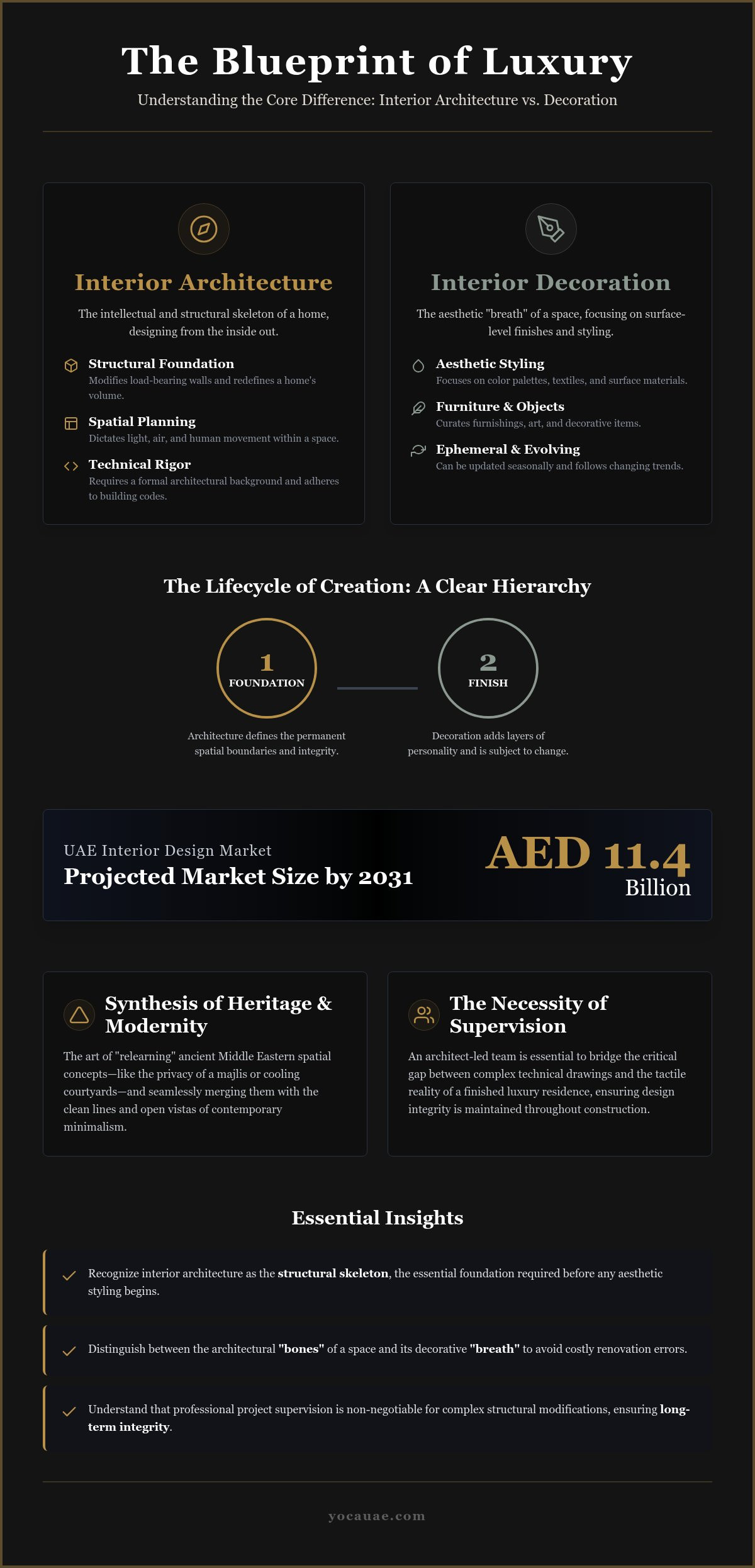
What if the true essence of luxury lies not in the gold-leafed surfaces we see, but in the unseen dialogue between a building's bones and its indwelling spirit? In the sophisticated-yet-demanding landscape of the UAE, where the interior design market is projected to reach د.إ 11.4 billion by 2031, many homeowners find themselves caught in a state of paralysis. You might fear that a significant renovation could lead to structural mistakes, or perhaps you're simply tired of spaces that feel like mass-produced replicas of global trends. You understand that a home should be a bridge between your heritage and your future, yet the path to achieving that through interior architecture often feels obscured by technical jargon and professional ambiguity.
This article promises to illuminate the profound intersection of structural integrity and artistic legacy that defines modern luxury. You'll learn how the careful-yet-daring synthesis of architectural theory and manual craftsmanship ensures your home is both uniquely yours and built to last. We'll preview the essential role of professional project supervision and the transformative power of bespoke elements, providing you with a roadmap to a space that is as structurally resilient as it is aesthetically soulful.
Key Takeaways
- Recognize how interior architecture serves as the intellectual and structural skeleton of a home, providing the essential foundation required before any aesthetic styling begins.
- Identify the technical rigor needed for complex structural modifications in Dubai and Abu Dhabi villas to ensure long-term integrity and adherence to regional building standards.
- Distinguish between the architectural "bones" of a space and its decorative "breath" to better navigate professional roles and avoid costly renovation errors.
- Discover the art of "relearning" ancient Middle Eastern techniques to seamlessly merge traditional heritage with the clean lines of contemporary minimalism.
- Understand the necessity of professional project supervision to bridge the gap between complex technical drawings and the tactile reality of a finished luxury residence.
Defining Interior Architecture: Beyond Surface Aesthetics
To understand the essence of a truly refined home, one must look past the silken textures of a curtain or the curated patina of a side table. Interior architecture represents the structural and technical skeleton of a residence; it's the silent, unyielding framework that dictates how light, air, and human movement interact within a volume. While many mistake the discipline for mere decoration, it's an intellectually rigorous practice of designing from the inside out. It requires a profound understanding of how a space breathes and evolves over time. For those seeking a comprehensive overview of interior architecture, it's clear that this field sits at the intersection of structural engineering and artistic expression. It serves as a catalyst for innovation, ensuring that a modern villa in Dubai isn't just a temporary stage for trends but a permanent cultural legacy. This approach values the lifecycle of creation, prioritizing the preservation of history through a modern lens rather than simple production.
The Architecture of the Interior
This discipline extends far beyond the surface, encompassing the precise placement of windows to capture the shifting desert sun and the orientation of doors to facilitate a natural, intuitive flow. It involves the seamless integration of complex plumbing and electrical systems into the very fabric of the walls. Such a multifaceted process demands a formal architectural background, as it requires the technical agility to modify load-bearing structures while maintaining the artistic passion needed to create a soulful atmosphere. It's a delicate dance between the rigid requirements of building codes and the fluid dreams of the dweller. At Yoca Interiors, our team of over 100 architects and artisans approaches these technical challenges as opportunities for artistic reinvention, ensuring every structural choice serves a dual purpose of utility and beauty.
Why Architecture Precedes Decoration
There's a persistent myth that the design process begins with the selection of furniture or a color palette. In reality, the lifecycle of creation must start with the structural shell. Before the first piece from the Yoca Collection is placed, the interior architecture must define the spatial boundaries and the play of light. This foundational planning is where heritage truly lives, as it allows for the relearning of traditional Middle Eastern spatial concepts, such as the privacy of the majlis or the cooling properties of internal courtyards. While styling is ephemeral and subject to the whims of the season, the architecture of the interior remains a permanent testament to a home's integrity and its owner's vision. It provides the necessary grounding that allows subsequent layers of styling to feel intentional rather than arbitrary.
The Technical Blueprint: Structural Modifications and Spatial Planning
The technical blueprint serves as the rigorous bridge where philosophical concepts meet the unyielding laws of physics. In the context of interior architecture, this document is far more than a simple map; it's a manifesto of intentionality that dictates the precise flow of human energy and movement. By merging architectural theory with anthropological insights, a designer can predict how a family will inhabit a space, ensuring that the layout feels both expansive and intimately grounded. In the fast-paced development environments of Dubai and Riyadh, these drawings act as the ultimate safeguard for design integrity, preventing the dilution of a vision during the chaotic phases of construction.
Navigating Structural Modifications
Structural modifications in high-end UAE villas often involve the daring-yet-calculated removal of load-bearing walls to create the open-plan vistas synonymous with modern luxury. This process is complex. It requires more than just a vision; it demands the authority of an architect-led team to oversee contractors and ensure that every beam and column is reinforced according to local building codes. When you decide to redefine your home's volume, you aren't just renovating; you're engaging in a structural rebirth that requires constant professional oversight. This level of expert project supervision ensures that your aesthetic goals never compromise the safety or the structural shell of the residence.
The Language of Technical Drawings
A technical drawing is where the tactile nature of manual craftsmanship first meets the precision of formal education. These blueprints translate the "why" of a design into the "how" of its execution, detailing everything from the exact depth of bespoke brass inlays to the seamless joining of artisanal stone work. Professional bodies like the International Interior Design Association emphasize that such precision is what separates a professional interior architecture intervention from a surface-level makeover. Within these lines, material selection is finalized, ensuring that the weight of a marble slab or the tension of a custom-forged staircase is accounted for long before construction begins. It's a language of absolute clarity, one that protects the lifecycle of the creation and ensures that the final result remains a faithful reflection of the original visionary intent.
Interior Architecture vs. Interior Design: Navigating the Distinction
The distinction between these two disciplines is often blurred in casual conversation, yet it remains fundamental to the successful realization of a luxury property. While interior design breathes life into a room through the curation of color, fabric, and light, interior architecture provides the essential bones that support that breath. It's a dialogue between the permanent and the ephemeral. One discipline concerns itself with the structural shell and the technical agility required to transform a space; the other focuses on the sensory experience of habitation. This distinction is vital in the UAE market, where the fast-paced evolution of residential villas demands both the intellectual weight of architectural theory and the soulful touch of fine styling.
A Comparative Framework for Clients
Understanding where one discipline ends and the other begins requires looking at the technical rigor of interior architecture and the intended lifecycle of the work. The following framework helps clarify these professional boundaries:
- Scope of Work: Architecture manages structural modifications, load-bearing interventions, and the integration of complex mechanical systems. Design focuses on the aesthetic layer, including furniture selection and surface treatments.
- Professional Requirements: Leading a structural intervention requires a formal architecture degree and a deep understanding of regional building codes. Styling often relies on aesthetic certifications and trend-based expertise.
- Project Duration: Structural changes are long-term commitments that define the building's legacy for decades. Styling is more fluid, allowing for seasonal updates or shifts in personal taste as the dweller's story evolves.
The Synthesis: When Architecture and Design Merge
At Yoca Interiors, we refuse to treat these disciplines as siloed departments, opting instead for a visionary synthesis that treats the home as a singular, cohesive narrative. The bridge between the technical skeleton and the decorative skin is found in the tactile, soulful nature of bespoke furniture. By acting as the expert curator of the entire lifecycle, we ensure that a structural modification, such as the widening of a gallery hall, is engineered specifically to frame a handcrafted piece from the Yoca Collection. Consider a project where we might remove a secondary partition to expand a living volume. This modification isn't done in isolation; it's designed to accommodate a bespoke, twelve-foot dining table that requires specific sightlines and lighting placements. This is the value of a single visionary lead. It ensures that the technical architecture and the artisanal furniture are born from the same intellectual seed. When one firm manages both the structural shell and the furniture, the result is a home that feels culturally grounded yet fearlessly modern. It's a relearning of the design process where the technical and the organic are no longer at odds, but rather in a continuous, elegant dialogue.
The Synthesis of Heritage and Modernity in Middle Eastern Spaces
The modern Middle Eastern home serves as a profound canvas where the echoes of antiquity meet the sharp, uncompromising lines of the future. Within this context, interior architecture transcends mere technicality to become a vessel for cultural identity, acting as a bridge between the weight of history and the lightness of contemporary minimalism. We don't simply build; we engage in a deep-seated relearning of ancient techniques, adapting the wisdom of the past to the rigorous requirements of a modern aesthetic. It's a deliberate-yet-soulful synthesis where the tactile warmth of hand-carved stone or the muted gleam of aged brass is balanced by the airy transparency of global design trends. By utilizing a dedicated team of over 100 architects and artisans, we ensure that every structural choice is grounded in the authenticity of human touch, transforming a residence into a sanctuary of living heritage.
South Asian Roots in a Global Context
Our foundation in award-winning international practice allows us to weave rich South Asian artisanal traditions into the vibrant, fast-evolving tapestry of Dubai and Riyadh luxury. We view every residence as a story-driven narrative, a physical manifestation of a client's specific cultural journey that honors their lineage while embracing a forward-looking identity. By bridging these disparate worlds, we create a continuous dialogue between the local and the global, resulting in a space that feels both internationally sophisticated and deeply rooted in its own soil. It's about more than just surface-level beauty; it's about preserving the intellectual and emotional soul of a culture within a high-end, structural shell that meets the demands of 2026 and beyond.
Bespoke Furniture as Architectural Form
To achieve a truly unique interior, one must move away from the generic and embrace the bespoke as a structural necessity. Custom furniture isn't just an addition to a room; it's an extension of the interior architecture itself, designed to harmonize with the specific volumes and light-play of the architectural shell. The Yoca Collection represents this philosophy, offering limited-edition pieces that are born from the same design-led process as the building's bones. These aren't mass-produced objects but rather artifacts of a philosophy that treats every joint and finish as a vital part of the home's story. This tactile completion of our architectural vision ensures that the final space remains timeless, resisting the ephemeral nature of retail trends to create a lasting legacy of craftsmanship.
Explore how our bespoke furniture and interior architecture services can transform your heritage into a modern masterpiece.
Executing the Vision: From Technical Drawings to On-Site Supervision
The transition from a silent drawing to a resonant physical space is the most vulnerable phase of any interior architecture project. It is here that the intellectual weight of the design meets the chaotic reality of the construction site. The lifecycle of creation moves through a series of rigorous checkpoints, beginning with the conceptualization of the structural shell and culminating in the final structural sign-off. Throughout this process, the architect acts as a vigilant protector of the original vision, ensuring that the technical agility demonstrated in the blueprints is translated into every stone joint and load-bearing modification. It's a journey that requires both the authority of a formal education and the humility of a student of ancient crafts.
The Critical Role of Project Supervision
Even the most sophisticated technical drawings can fail if they aren't met with rigorous on-site management. In the high-stakes construction environments of Dubai and Riyadh, project supervision is the essential force that maintains the rhythmic tension between the contractor's speed and the artisan's precision. It's a role that requires constant presence to ensure that material quality never wavers and that the craftsmanship remains beyond reproach. You don't want your vision compromised by the fast-paced nature of regional construction. Without this level of oversight, the soul of the interior architecture can easily be lost to the small, daily compromises of the build. Our team of over 100 artisans depends on this clarity to execute their work with the intentionality it deserves, bridging the gap between a theoretical plan and a tactile reality.
The Final Layer: Styling and Curation
Once the structural shell is complete and the bones are set, the focus shifts toward the final layer of identity. Interior styling is the tactile completion of the architectural vision, where art and accessories are curated to breathe life into the volume. This curation isn't a mere addition; it's a deliberate dialogue with the heritage-infused craftsmanship of the bespoke furniture already in place. By selecting pieces that resonate with the client's cultural journey, the space is transformed from a structure into a home. This final layer adds the "breath" to the "bones," resulting in a residence that feels both culturally grounded and fearlessly modern. It's the final step in a narrative that values the lifecycle of creation and the preservation of history through a modern lens.
Begin your architectural journey with Yoca Interiors to ensure your vision is protected from the first drawing to the final curated accessory.
Building Your Permanent Legacy
The journey toward a soulful home begins far beneath the surface, requiring a deep synthesis of structural integrity and artistic heritage. You've discovered that interior architecture is not merely a technical phase but the very skeleton upon which your life's story is built. It's the silent dialogue between the technical agility of structural modifications and the tactile warmth of artisanal craftsmanship. By prioritizing professional project supervision and the integration of bespoke elements, you ensure that your residence remains a testament to design integrity in a fast-evolving landscape.
At Yoca Interiors, we bring an award-winning heritage and a dedicated team of over 100 architects and artisans to every project. Our full suite of services, from complex structural interventions to the creation of the Yoca Collection, bridges the gap between ancient wisdom and modern form. We invite you to Partner with Yoca Interiors for Visionary Interior Architecture and transform your space into a sanctuary that honors your past while fearlessly embracing the future. Your home is waiting to be reinvented.
Frequently Asked Questions
What is the difference between an interior architect and an interior designer?
An interior architect manages the structural shell and technical systems, requiring a formal architectural background to handle load-bearing modifications. In contrast, an interior designer primarily curates the aesthetic layer, such as color palettes and soft furnishings. At Yoca Interiors, we bridge this gap by treating interior architecture as the foundational discipline. This ensures your home is structurally resilient before any styling begins, creating a sophisticated dialogue between the building's permanent bones and its decorative elements.
Do I need an interior architect for a residential renovation in Dubai?
You need an interior architect if your renovation involves altering the structural volume, such as removing walls or relocating plumbing and electrical systems. Dubai’s building regulations are rigorous; they require technical drawings and professional oversight to ensure design integrity. Engaging an expert firm protects your investment, ensuring that your villa’s transformation is both legally compliant and artistically sound, rather than just a superficial update to the existing layout.
What are the benefits of structural modification in luxury interior design?
Structural modifications allow you to redefine the essence of a space, creating the expansive, open-plan vistas that characterize modern luxury. By altering the building's skeleton, you can optimize the play of natural light and facilitate an intuitive flow of human movement. These changes provide the necessary grounding for bespoke furniture layouts, ensuring that every element of your home is born from a singular, visionary intent rather than being restricted by existing partitions.
How does interior architecture incorporate sustainable design and adaptive reuse?
This discipline promotes sustainability by valuing the lifecycle of creation and the preservation of history through a modern lens. Through adaptive reuse, we breathe new life into existing structures, reducing waste by reinventing the interior shell rather than simple production. At Yoca Interiors, we prioritize premium, durable materials like stone and wood, ensuring that the interior architecture remains timeless and resilient, resisting the ephemeral nature of trends and fostering a more conscious approach to luxury.
What should I look for when choosing an interior architecture firm in Riyadh?
Seek a firm that demonstrates both the intellectual weight of architectural theory and a deep respect for cultural heritage. It's essential to choose a partner that offers rigorous on-site project supervision, especially in Riyadh's fast-paced construction environment. Look for a team that possesses a formal education in architecture and a proven ability to bridge the gap between technical blueprints and the tactile, soulful nature of manual craftsmanship, ensuring your vision is never compromised.
How long does a typical interior architecture project take from start to finish?
The timeline for a comprehensive intervention varies based on the project's scale and the complexity of structural modifications. A typical lifecycle, from initial conceptualization and technical drawings to the final structural sign-off, can span several months. This deliberate pace allows for the careful synthesis of technical and organic elements, ensuring that every artisanal detail is executed with precision and that the final result reflects a deeply considered design philosophy.
Does an interior architect also handle the furniture and styling of a home?
While some firms focus solely on the shell, a boutique firm manages the entire project lifecycle. We believe that bespoke furniture is a structural necessity, acting as the tactile completion of the architectural vision. By managing the transition from the structural shell to the curation of specific collections, we ensure a cohesive narrative where the technical and the decorative exist in a continuous, elegant dialogue, resulting in a home that is uniquely yours.
Why is technical drawing accuracy so important for bespoke interiors?
Technical drawings are the manifesto of intentionality that prevents the dilution of a vision during construction. Accuracy is vital for the seamless integration of bespoke elements, such as handcrafted stone work or precise brass inlays, which leave no room for error. These blueprints translate philosophical concepts into physical reality, ensuring that every contractor and artisan understands the "why" behind the "what," ultimately safeguarding the design integrity and the structural shell of the residence.


